

Das Schaudepot
The idea of housing a display depot with problematic objects of commemorative culture here took shape in 2021: In that year, it was finally decided that the Citadel would take over the two larger-than-life bronze horses from the New Reich Chancellery. In addition, further requests came from other Berlin districts to free them from unwanted monuments and the like and to help them exhibit and tell their story instead of letting them disappear.
However, the Queen's Bastion is not only a logistical solution to the problem of “Where to put these huge testimonies to history?”. In terms of content, it ties in with “Revealed. Berlin and its monuments", but instead of opening an extension of the same design, the aim is to experiment with the exhibits: The main objects will remain the same, but once a year the perspective will change, with a new exhibition featuring new texts and a new focus around them. Curators from science, art or even schools and other educational institutions are asked to design them. This creates the opportunity to keep the objects alive and to approach them from different angles - historically, artistically or experimentally.
Visitors are invited to express their thoughts and wishes at any time!
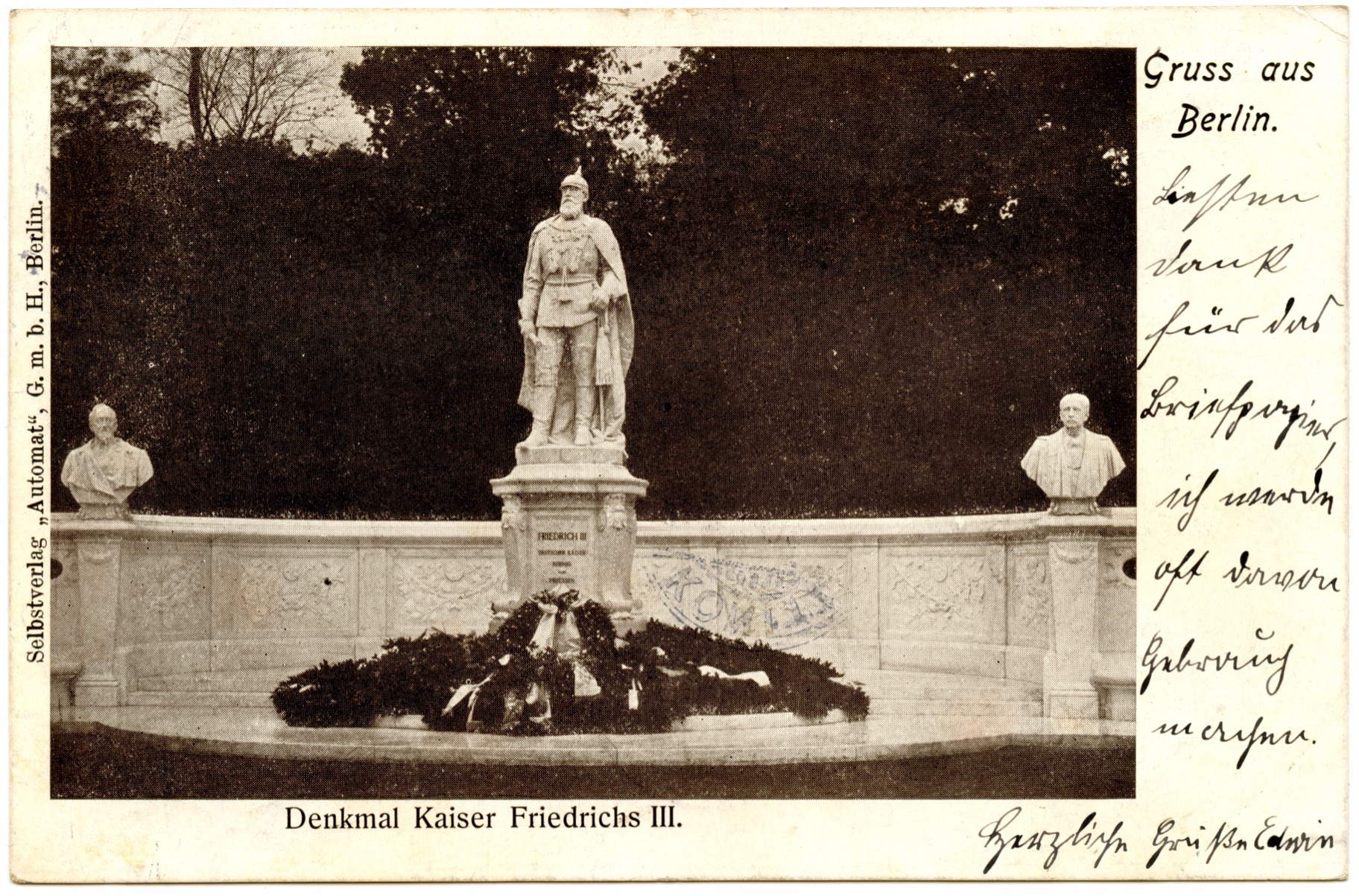
Leonhard von Blumenthal (* 1810 in Schwedt/Oder; † 1900 at Gut Quellendorf bei Köthen)
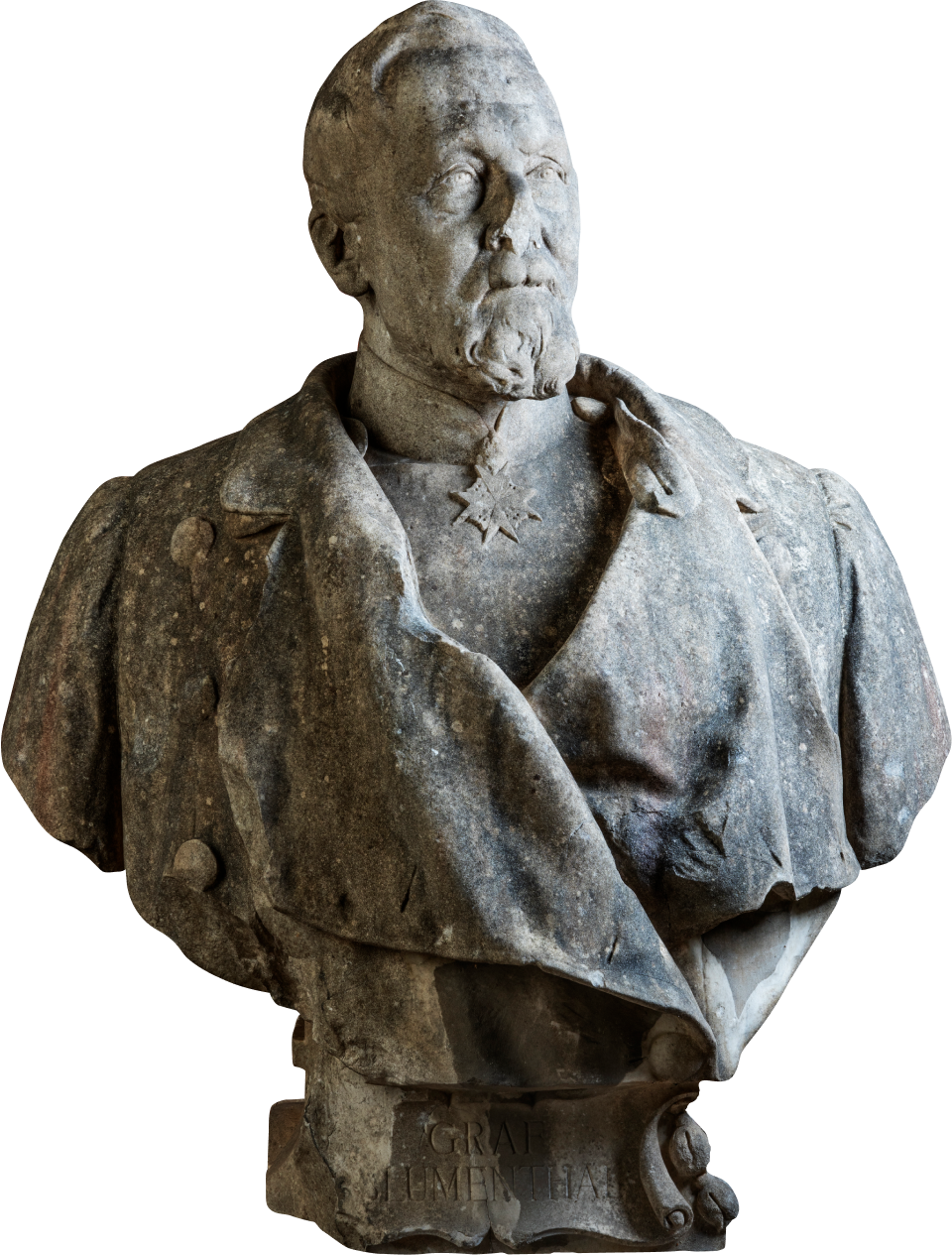
Bust of Leonhard von Blumenthal
Marble
1903
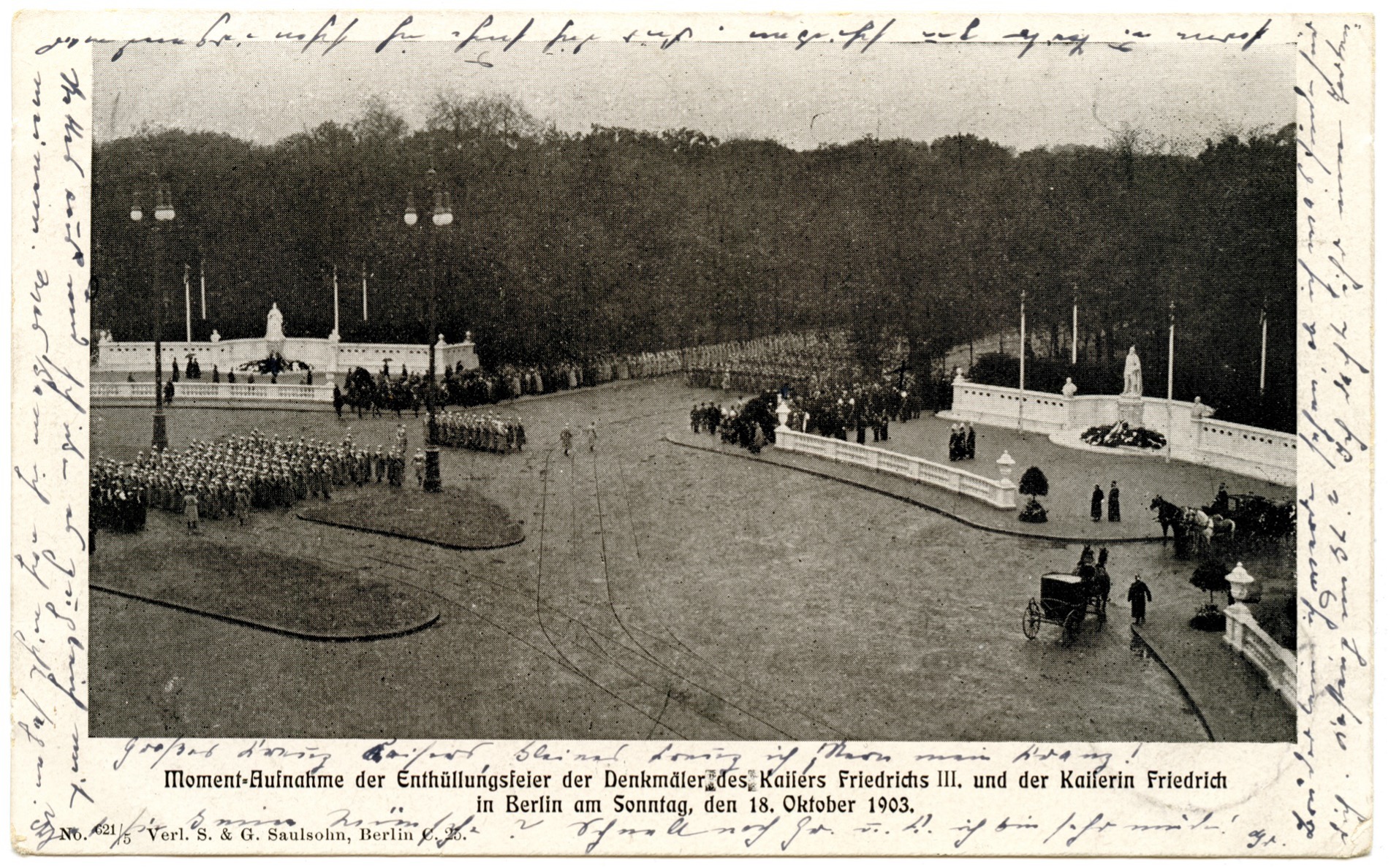
The bust of Field Marshal Leonhardt von Blumenthal is the left of the two assistant busts of the former monument to Emperor Frederick III. It is dedicated to the Emperor’s long-time advisor and one of his closest confidants, who distinguished himself with his strategic skills, particularly in the so-called wars of unification. In his diary, published in 1902, he reports on his time as Chief of the Crown Prince’s General Staff in the Austro-Prussian War of 1866 and the Franco-Prussian War of 1870/71, during which he consistently spoke out against Chancellor Otto von Bismarck’s desire to take Paris by bombardment, despite fierce resistance. He was present at the proclamation of the German Empire in the Palace of Versailles.
The fact that, like Frederick III, he was married to an Englishwoman certainly contributed to their mutual esteem. Four of the eight streets in Berlin are still named after him today.

Sculptor: Adolf Brütt (* 1855 in Husum; † 1939 in Bad Berka)
Grew up in Kiel
1872–1875 Training as a stonemason with Adolf Müllenhoff (1831-1899) in Kiel at Sophienblatt
1875–1878 Studied at the Academy of Arts in Berlin
1879–1882 Occasional work, assistant to Carl Begas (1845–1916) and Gustav Eberlein (1847–1926)
1883 Trip to Italy, marriage and first own studio in the Stadtbahnbogen on Schiffbauerdamm
1887 international fame and prizes with “Der Fischer” and “Eva” in 1889
1890 Studio house in Lützowstraße, foundation of the “Academic School of Fine Arts” in 1891, move to the Siegmundshof studio house around 1897
1892 Member of the Royal Academy of Arts in Berlin
1893 Founding member of the “Munich Secession”, professor since 1896
Numerous monuments and architectural sculptures, including the monument to Margrave Otto the Lazy in 1899 and the monument to King Friedrich Wilhelm II for Victory Avenue in 1890
1903 Monument to Emperor Frederick III in front of the Brandenburg Gate
1905 Professor of sculpture at the Weimar School of Art, foundation of the Weimar School of Sculpture and shift from historicism to modernism
1909 Monument to Theodor Mommsen for the University of Berlin
1910 Return to Berlin, elected to the Senate of the Academy of Arts in Berlin in 1912
Fewer works (including fountains and memorials to the fallen) during the First World War and the Weimar Republic
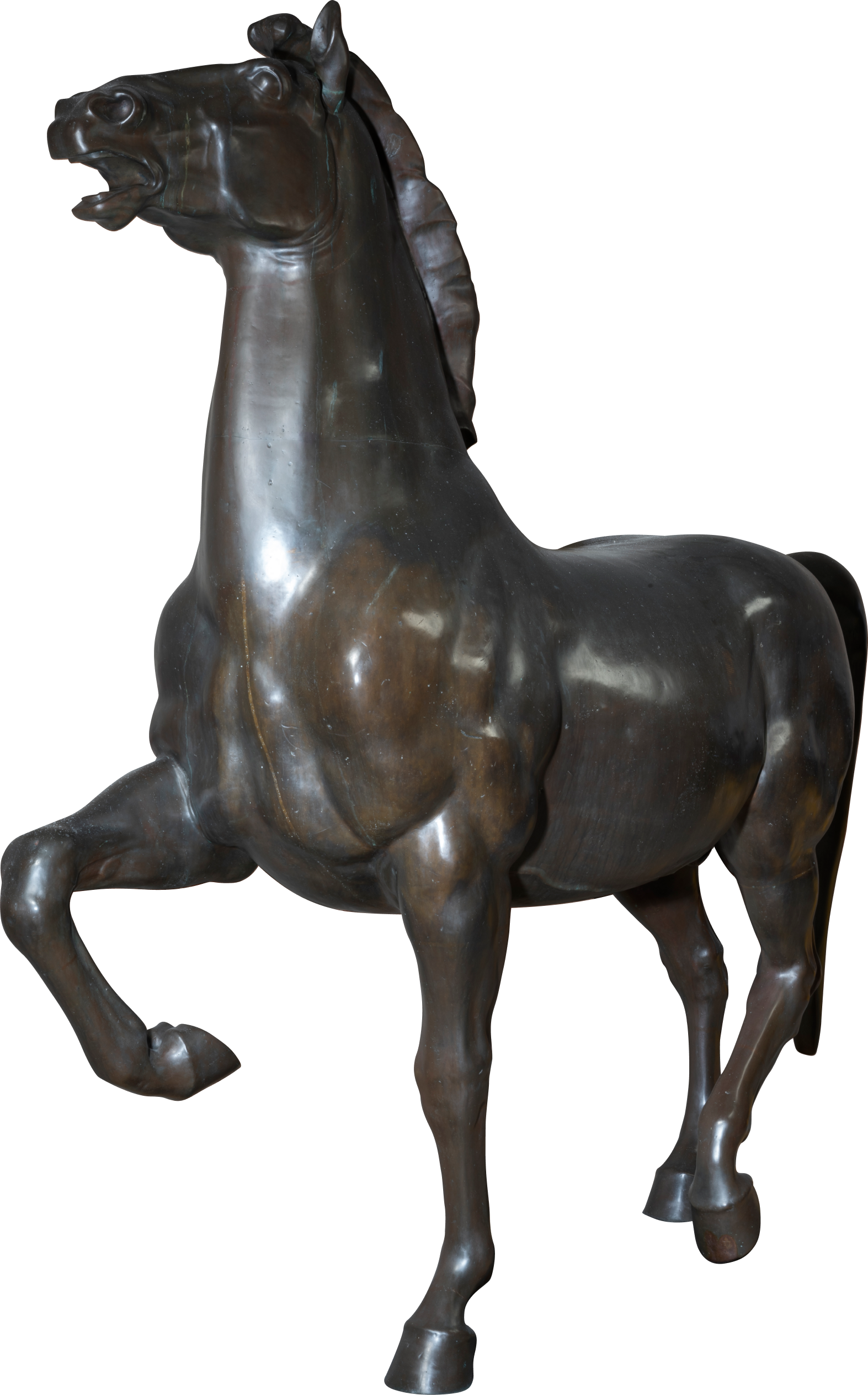
Sculpture of the group „Striding Horses“
Bronze
1939
On loan from the Federal Republic of Germany
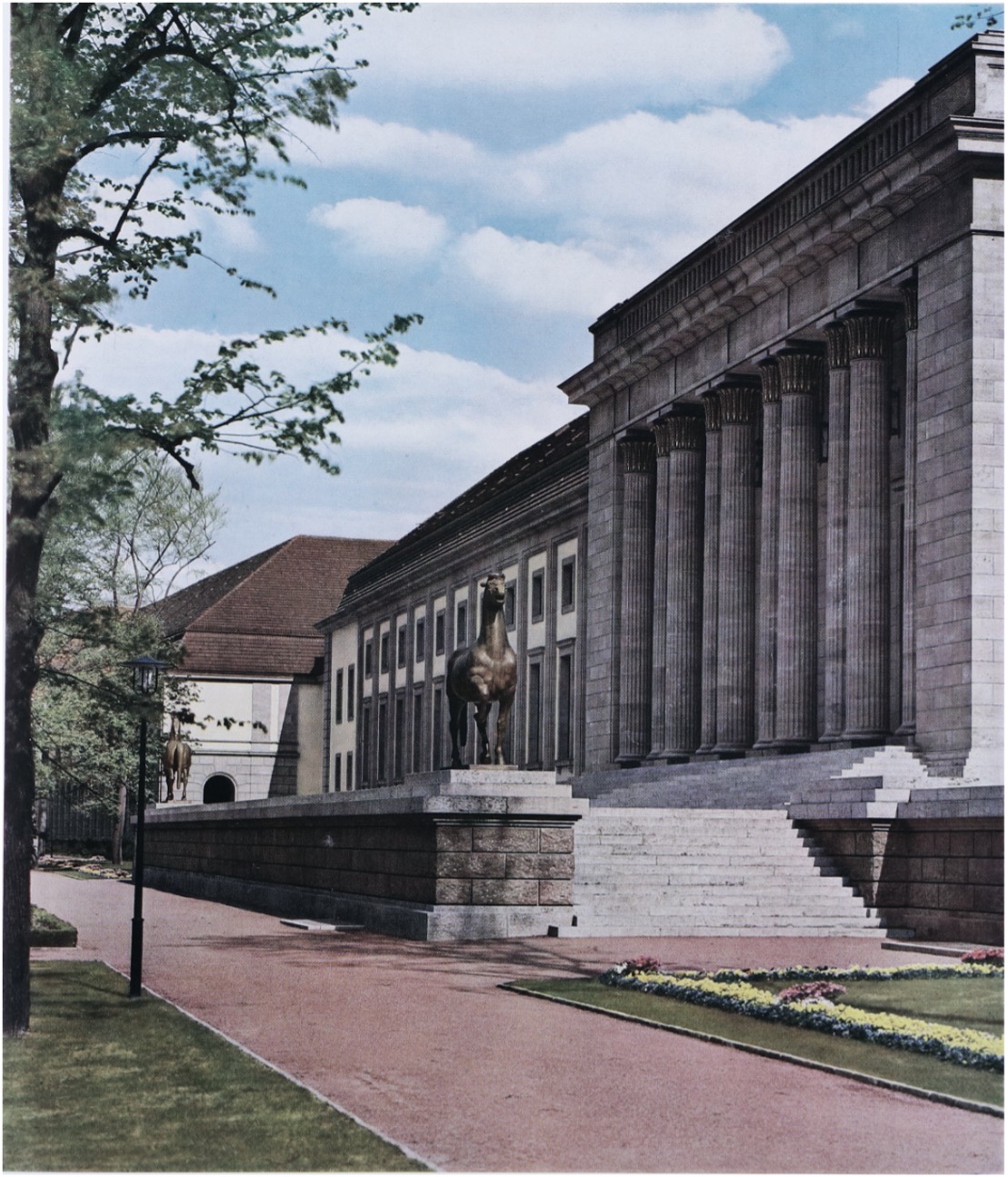
Private property / Die Neue Reichskanzlei (Architekt Albert Speer)
The two bronze sculptures “Striding Horses” were commissioned by architect Albert Speer for Adolf Hitler’s New Reich Chancellery in Berlin-Mitte and made by Josef Thorak. With their unnaturally large and muscular design, the horses fit into the propagandistic Nazi architecture: they symbolize obedience, loyalty, masculinity and readiness to fight. After 1945, the sculptures set off on an extraordinary journey – from the workshops of sculptor Arno Breker, via a Soviet barracks site and finally, after being smuggled across the inner-German border, to a Nazi art collector in West Germany. After the “Striding Horses” turned up there and were seized by the criminal authorities, they were brought to the Spandau Citadel. Here they complement the display depot and the permanent exhibition “Unveiled. Berlin and its monuments”, adding to the discussion about ‘toxic’ remembrance culture.
The Märzfeld in Nuremberg
On the Nazi Party Rally Grounds in Nuremberg, Albert Speer wanted to build a place for Wehrmacht show maneuvers – the so-called March Field. The name was inspired by Mars, the god of war, and the reintroduction of compulsory military service in March 1935. Spectator stands surrounded by towers and a group of colossal figures were to be erected on the huge area, in the gigantomaniacal architectural style of the National Socialists. The “Walking Horses” were commissioned as part of this group in 1938 – the bronze sculptures were therefore smaller models for this construction project. With their monumental style, they fitted perfectly into the planned group and framed the goddess of victory and warrior figures. The fact that a horse rider was planned next to each of the sculptures can still be seen in the bronze horses by the horse’s posture and its open mouth. The March Field and the planned group of sculptures were never completed.
Josef Thorak (* 1889 in Wien; † 1952 in Bad Endorf/Bavaria)
Ab 1903 Apprenticeship as a potter in Slovakia, then employed at the Wienerberger pottery factory
1911–1915 Academy of Fine Arts in Vienna, front-line soldier in the First World War
Until the mid-1920s commissioned work, e.g. war memorials for municipal, regimental, club and private cemeteries, but no breakthrough
1933 Divorce from Jewish wife in second marriage, she emigrates to England with their son in 1938
1934 Signatory of the appeal by cultural workers for a “referendum” on the unification of the offices of Reich President and Reich Chancellor in the person of Hitler and successful efforts to obtain commissions from the National Socialist government
1936 Commissions such as the Reich Sports Monument and the design of the relief for the Reichbank building
1937 Breakthrough with the Paris World Exhibition, appointed by Hitler as head of a master class at the Academy of Fine Arts in Munich
1937–1944 Participation in all “Großen Deutschen Kunstausstellungen”
1939 Horse at “Großer Deutscher Kunstausstellung”; commission for two horses from Albert Speer
1942 Joining the NSDAP
1944 Inclusion in the so-called “Gottbegnadeten-Liste” (“God-gifted list”) and exhibition German artists and the SS, Salzburg with bust of Hitler
1948 Successful “denazification”
1950 Solo exhibition in Salzburg
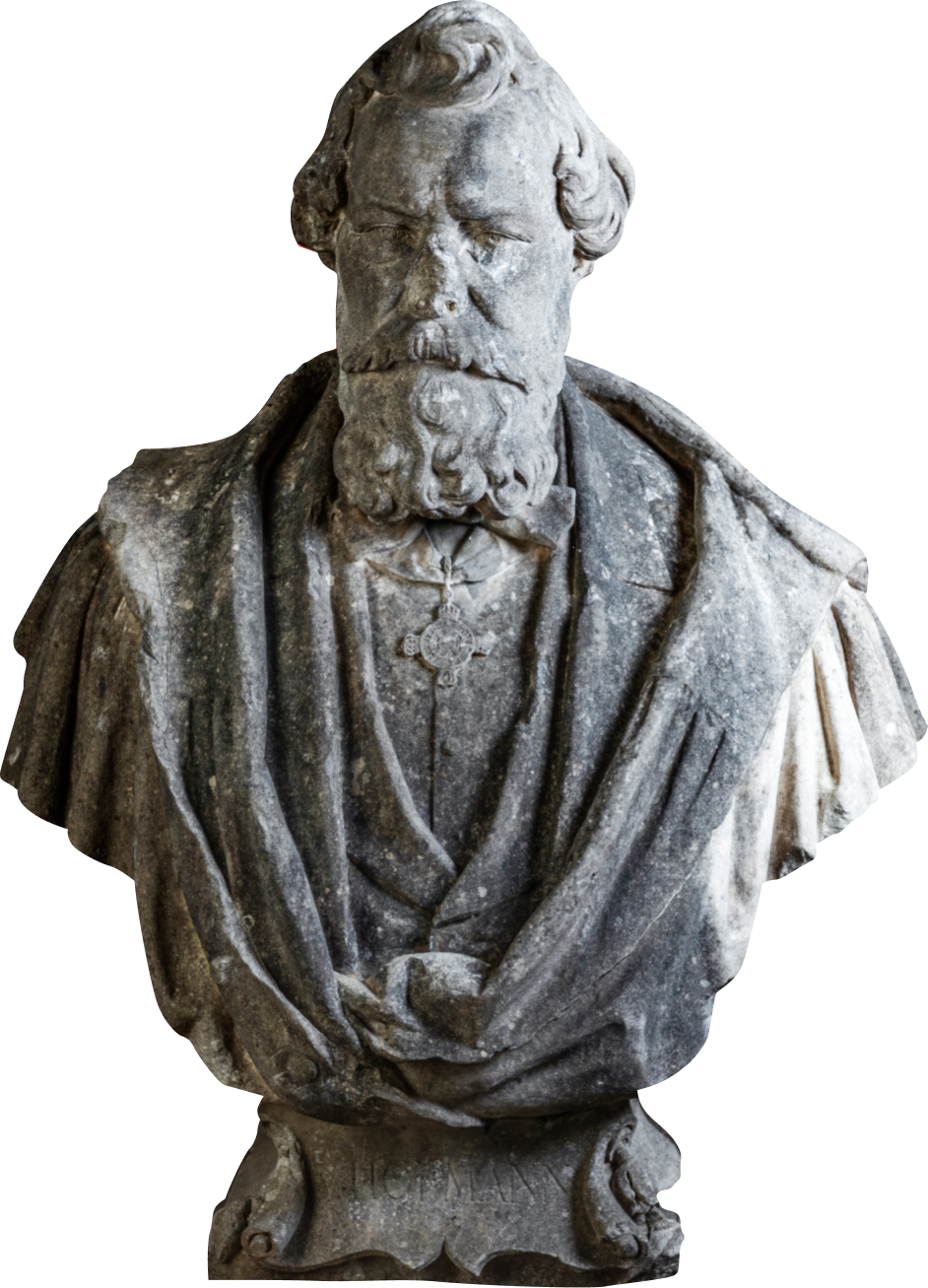
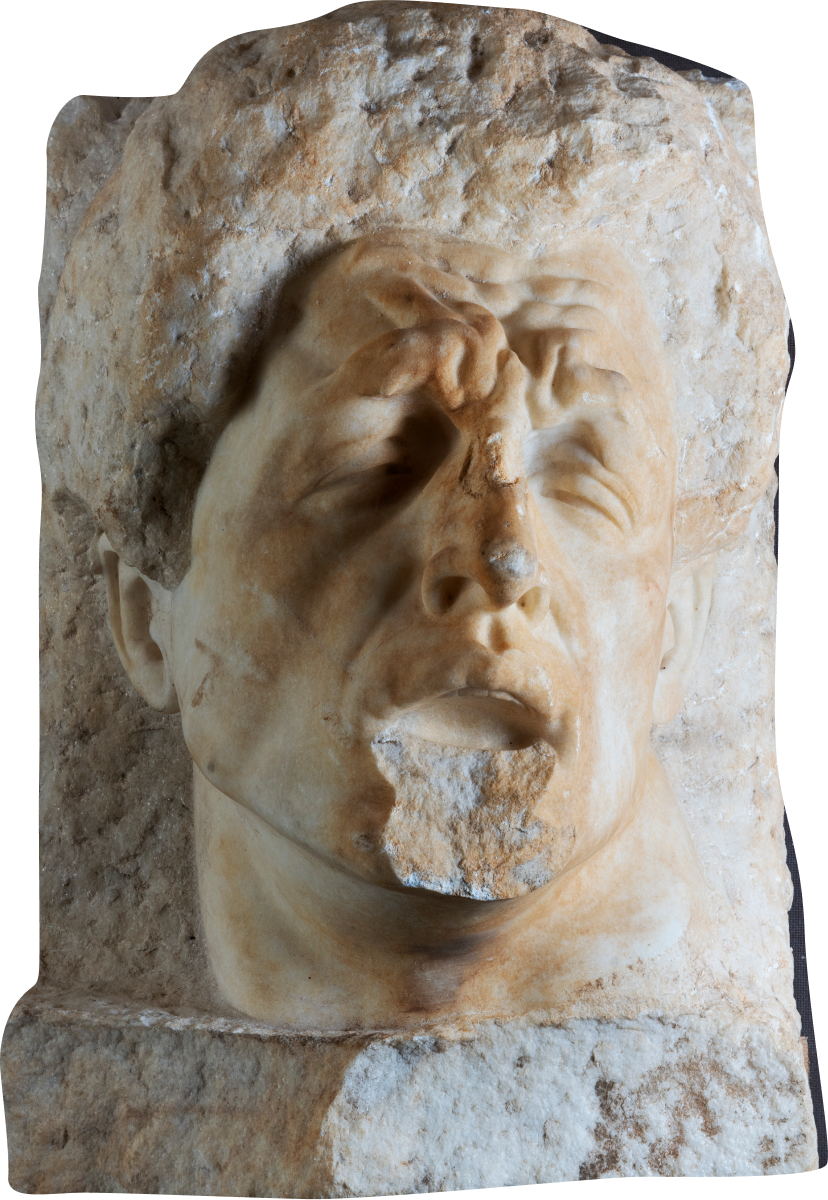
Bust of August Wilhelm von Hofmann
Marble
1903
The bust of August Wilhelm von Hofmann flanked the monument to Empress Friedrich III at the Brandenburg Gate. It honours the pioneering chemist in the research field of organic chemistry. His modern research theory created essential prerequisites for the development of the industrial production of aniline dyes, which were mainly used in textile dyeing. Empress Frederick III, who was very interested in science, had already attended his lectures as a princess in London – as had Karl Marx. She had him elevated to the nobility in 1888 and remained on friendly terms with him throughout his life.
At her father’s request, Hofmann went to London after studying in Giessen and completing his habilitation in Bonn in 1845. There he researched and taught at the Royal School of Mines for almost 20 years. His research findings were highly regarded, won several awards and were presented at the World Exhibition in 1862, among other places. Although he was one of the most respected chemists in England, he returned to Germany in 1863 and a year later established the First Chemical Institute in Georgenstraße at the Friedrich Wilhelm University of Berlin. In 1906, after the opening of a new institute building in Hannoversche Straße, the Museum of Oceanography moved there. In 1867, he founded the German Chemical Society with well-known chemists such as Bayer and Schering. As in England, his lectures and experiments attracted numerous students. On the day of his death, he was still supervising one of his almost 300 doctoral students.
Anna von Helmholtz, the physicist’s wife, wrote to a friend after his death: “He was so poetically inclined that he wrote a sonnet to his wife every morning and presented it to her while kneeling at her bedside”.
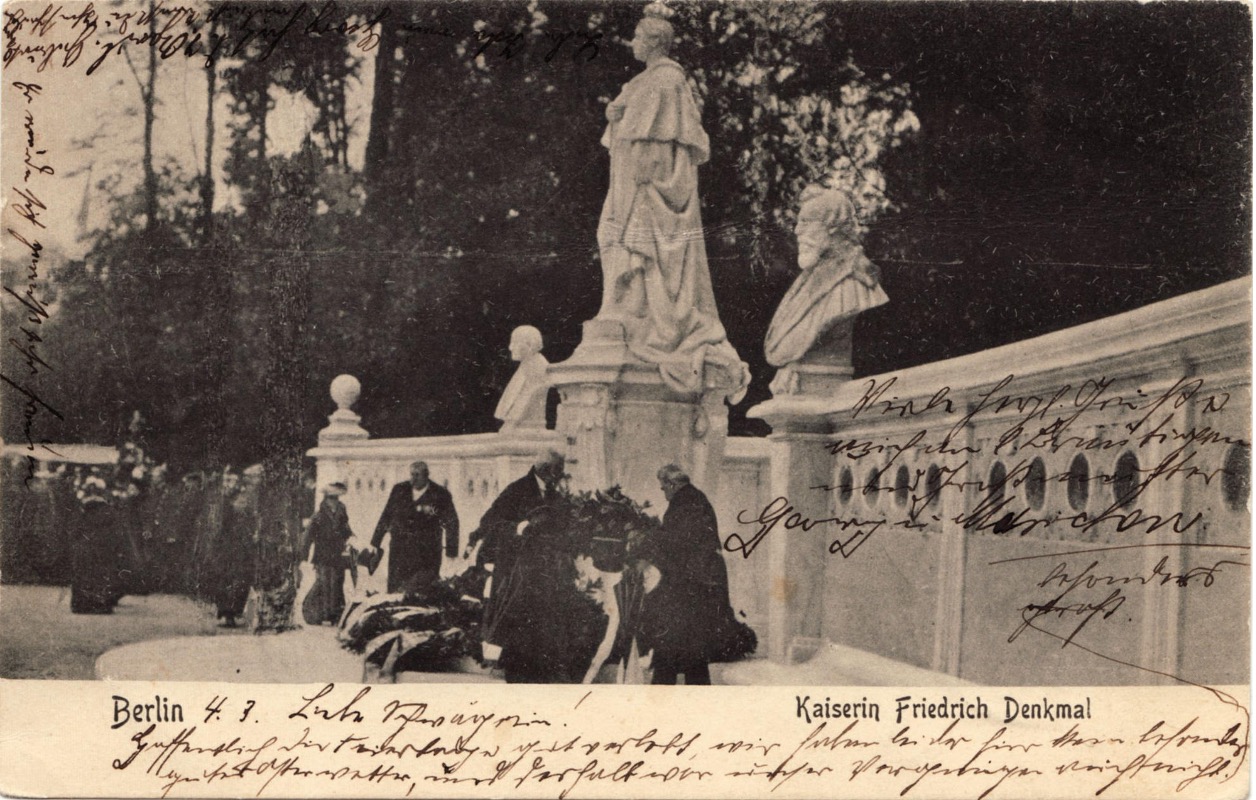
Sculptor: Fritz Gerth (* 1845 in Wiesbaden; † 1928 in Berlin-Charlottenburg)
Artistic training with his father, the sculptor and modeller Johann Julius Gerth
1875–1890 residency and deputy chairman of the German Artists’ Association in Rome, tomb monuments for Italian families, busts and medallions for the English art market
1891–1900 in Bad Homburg, studio in the Brunnensälchen
Seit 1900 portrait work in Berlin
1903 Monument to Empress Friedrich III in front of the Brandenburg Gate
1905–1910 Monuments in Bad Homburg and Wiesbaden
Muschelkalk, Between 1910 and 1925
Muschelkalk
Between 1910 and 1925
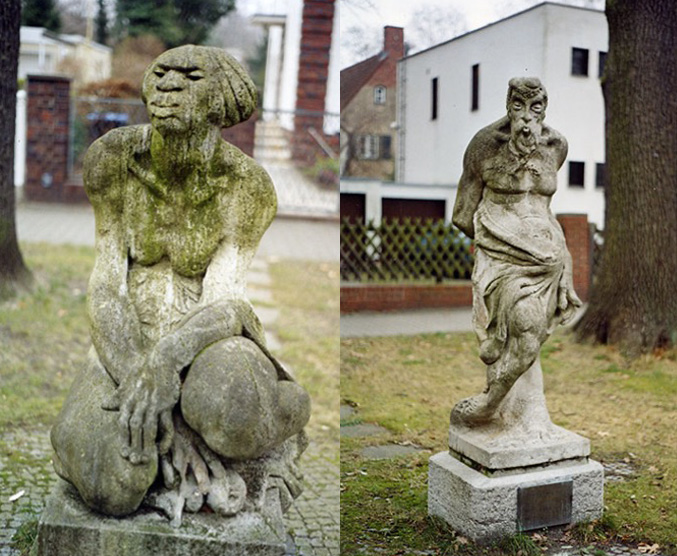
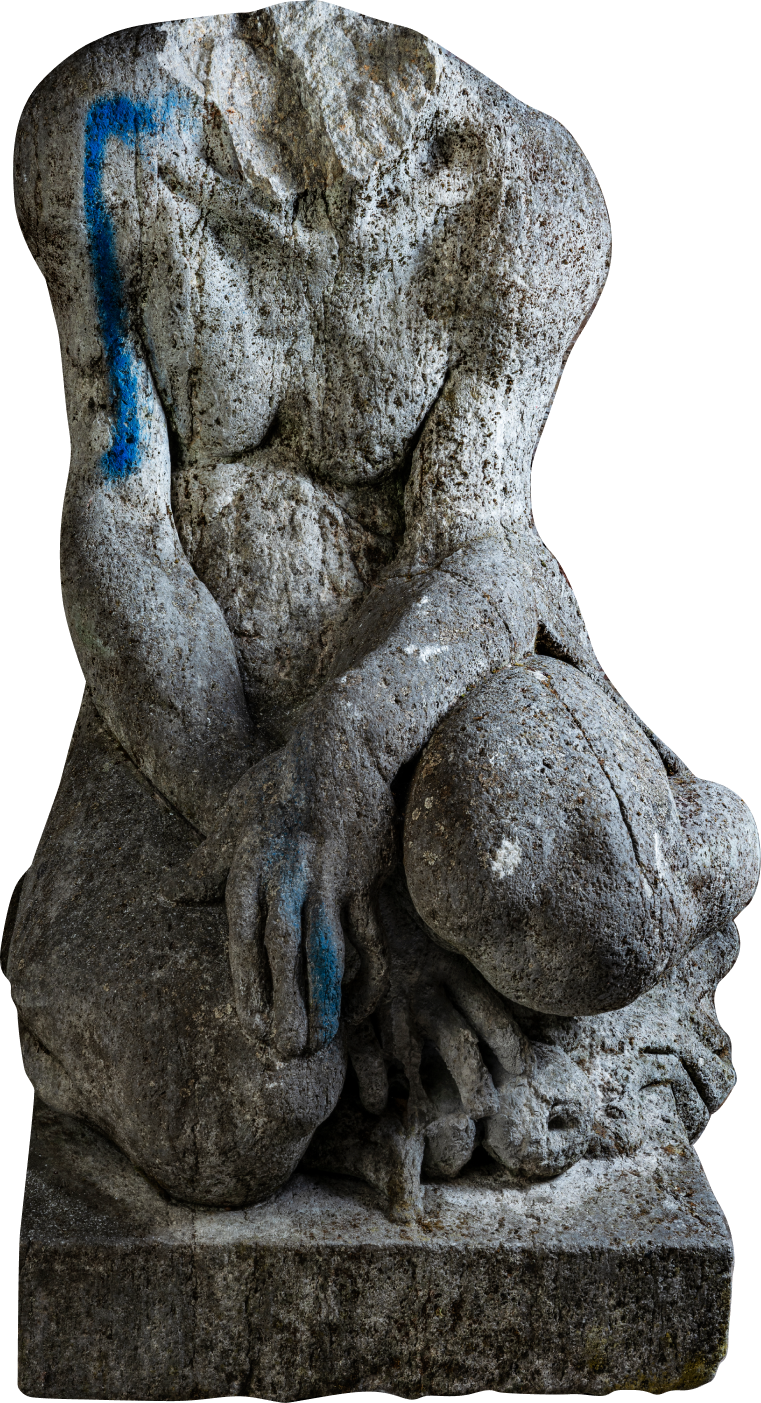
Until 1980, the artist’s studio was located on the property at Leuchtenburgstraße 18, in whose garden the two related figures “Faun” and “N***” stood. They were presumably decorative commissions, but it is not known for which location and by whom. The date of origin can also only be estimated: The stylistic mixture of Art Nouveau and Expressionism suggests a date between 1910 and 1925. Since 1985, the sculptures have served as a reminder of Hasemann’s studio, which was demolished after his death in 1979.
It was not until 2000, after cleaning, that they also received the eponymous signs. The bronze plaque now also featured the N-word, which, in addition to the depiction of the Black Woman – naked, exaggerated and in connection with a half-animal mythical creature – which was perceived as racist, has repeatedly led to complaints since 2018.
In 2020, applications to district politicians to remove the statue from public spaces were finally successful. While preparations were already underway to move it to Spandau Citadel, it was decapitated and graffitied in June 2020. Until 2022, there were great difficulties in actually implementing the removal. Among others, the Spandau AfD tried to influence the contextualization. Without any reliable facts, it demanded an exhibition of the destroyed artwork as evidence of left-wing activist vandalism. As the perpetrators and their political views are unknown, this was a purely populist motion that was rejected by a majority of the Spandau district council. In November 2022, the transport to the citadel and the display depot finally took place.
Arminius Hasemann (* 1888 in Berlin; † 1979 in Berlin)
1906–1912 Studied graphic design and sculpture
1912 Participation in the annual exhibition of the artists’ association “Berliner Secession” with two marble heads (“Condottiere” and “Narr”)
1913–1914 Travels as a touring musician to Switzerland, Italy, North Africa, Spain and France
Ab August 1914 Soldier on the Western Front
1915 Publication of his travel experiences under the title “Heaven and Hell on the Country Road” with 42 woodcuts: The work went through four editions by 1922 and made Hasemann famous
From 1918 Turning to sculptural works in public spaces
On 1. Dezember 1932 Joins the NSDAP (membership number 1,398,488)
From February 1933 Cultural director of the local NSDAP group in Zehlendorf, but hardly any public commissions due to his expressionist works
1943 Participation in the Great German Art Exhibition in Munich with a portrait bust of Herms Niel (1888-1954), composer and chief music director of the Reich Labor Service
1944/45 Hasemann was taken prisoner of war by the Soviets near Berlin
1946 Leading position in the construction team for the Soviet memorial in Treptower Park
From 1950 involved in the reconstruction of the German State Opera House in East Berlin
1965 Commission for a memorial plaque on the house where SPD chairman and Reich President Friedrich Ebert died in Berlin (today on the archive building of the Friedrich Ebert Foundation in Bonn)
Head sculptures with the motifs “Romanichel” and “Dying warrior”
Marble
Around 1940
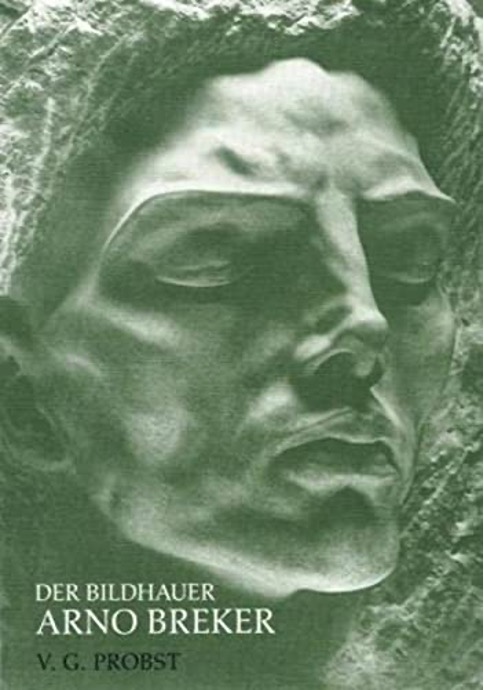
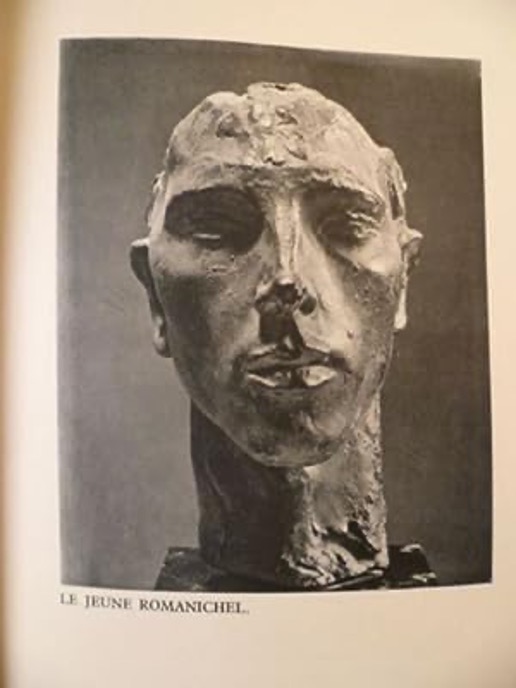
The two marble heads came to light in 2020 during garden work at the Kunsthaus Dahlem in the former state studio of Arno Breker (1900-1991). One of the heads, presumably intended as a façade decoration, depicts a dying warrior, similar to the works by Andreas Schlüter (c. 1640-1714) in the Zeughaus-Lichthof of the Deutsches Historisches Museum. The second work, known as Romanichel, is part of a series of portraits of a Roma boy whom Breker met in Paris at the end of the 1920s. In his memoirs, the sculptor describes how the boy knocked on his door looking for work and how he was immediately fascinated by his face. He made several portraits of him, at that time still in a rather impressionistic style. In 1940, Breker took up the motif of the beautiful “gypsy boy” again, in a highly stylized classicist manner in marble, much larger than life. At the same time the first major deportations of Sinti and Roma to concentration camps began. According to an expert opinion, however, the artworks cannot be clearly attributed to Breker himself or to any of his sculptor students.
The reason for its undiscovered “hiding place” underground for 75 years has also not yet been resolved. Built between 1939 and 1942 “at the special request of the Führer”, Breker’s studio was first used as an office by the Soviet and then the US military administration in 1945. They had Breker’s remaining works removed to an art collection point. Why and by whom the two marble heads were buried in the sand – whether out of disgust for Nazi art, to fill bomb craters or to protect them – remains a mystery for the time being.
Arno Breker (* 1900 in Elberfeld, Rhineland region; † 1991 in Düsseldorf)
1916–1920 Apprenticeship as a stone sculptor, attendance at the School of Arts and Crafts Elberfeld
1920–1925 Studied at the Düsseldorf Art Academy
1926–1927 Travels, including to France and North Africa, lithographs “Tunisian Journey”, development of a casting process without surface unevenness – important for later idealization under National Socialism
1927–1933 Lives in Paris, moves to Berlin in 1934
1935 Participation in the annual exhibition of the artists’ association “Berliner Secession”
1936 Participation in the Olympic Art Exhibition in Berlin, international attention and by the Nazi regime for the statues “Zehnkämpfer” and “Die Siegerin”
1937–1945 Professor of a sculpture class at the Hochschule für Bildende Künste in Berlin
1938–1944 State commissions in collaboration with the architect Albert Speer, personal contacts with Adolf Hitler, production of sculptures and reliefs for the New Reich Chancellery, among others
1939 Study trip to Italy and Stalin’s job offer for the Soviet Union
1941/42 Foundation of the “Arno Breker Steinbildhauerwerkstätten” in Wriezen, Brandenburg, use of prisoners of war for the work
1944 Inclusion in the so-called “God pardoned list” and thus exempt from military service
1945 After the end of the war, flight to Bavaria, 1948 Successful “denazification”
1950 Return to Düsseldorf, involvement in reconstruction
From 1960 Establishes a studio in Paris, commissions as a sculptor and graphic artist
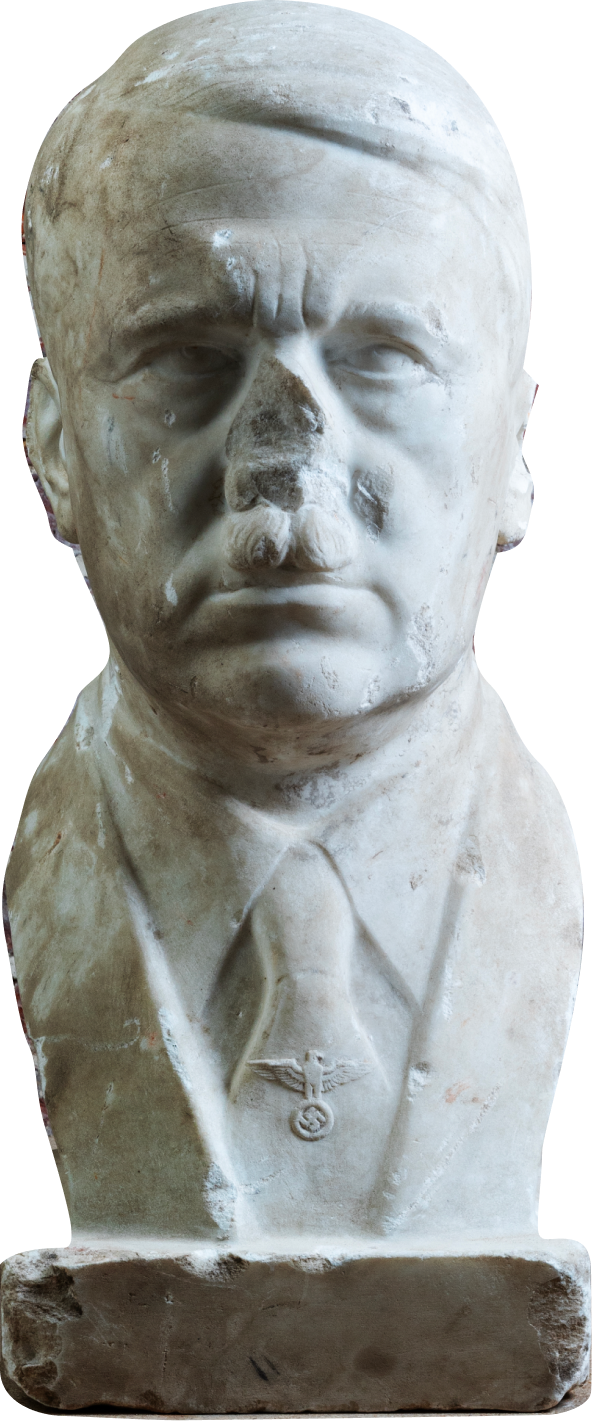
Bust of Adolf Hitler
Marble
1937
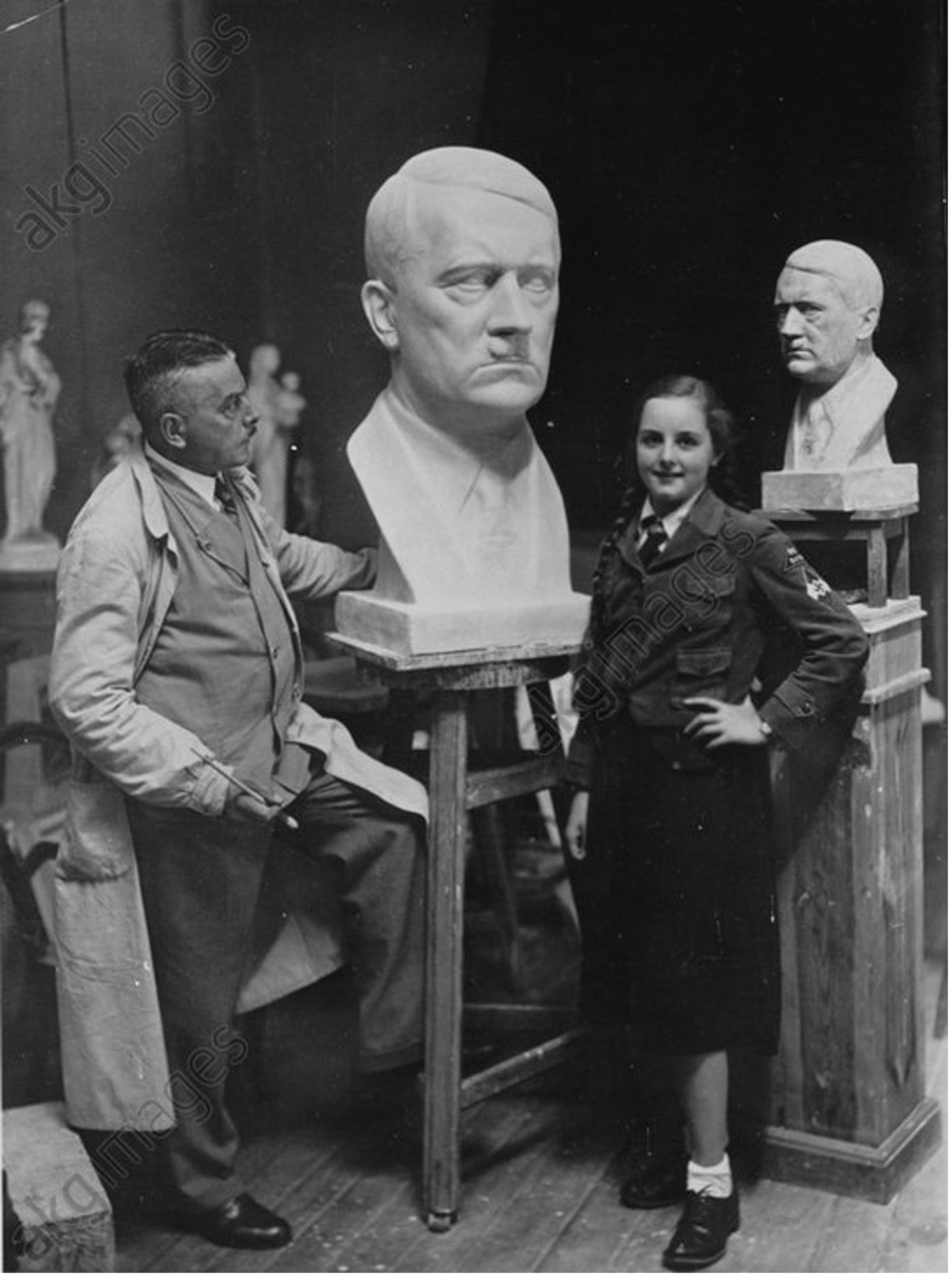
The marble bust of Adolf Hitler, weighing around 300 kg, came to light under the remains of buildings during construction work in Berlin-Mitte, around 2.50 m below the current ground level. The signature of the artist Josef Limburg (1874-1955) is still clearly visible on the bust. The excavation pit is at a point where the building complex was severely damaged by bomb hits during Allied air raids. The buildings were finally reduced to rubble because one of the main battle lines of the so-called “citadel” (inner defence line around the government district) ran here.
It is not known how the sculpture came to be here. But it is assumed that the Hitler bust was part of the interior of the administrative buildings there: At the end of the 19th century, as Berlin developed into a metropolis, a closed complex was built here, housing the main customs office, the provincial tax directorate and large parts of the financial administration. In 1941, the latter took over the task of administering and disposing of the expropriated property of Jews who had been persecuted and murdered by the state.
Limburg, who actually specialized in religious sculptures, sought commissions from the National Socialist government. It is likely that the bust of Hitler exhibited here was also a marble sculpture ordered for these administrative buildings and was not thrown into the rubble pit afterwards.
Josef Limburg (* 1900 in Hanau, Hessen; † 1991 in Berlin)
1888–1894 Visit to the Royal Academy of Drawing in Hanau
1894–1895 Studied at the Academy of Fine Arts in Vienna
1895–1900 Studied at the Royal Academy of Arts in Berlin
1900–1902 Stays in Rome and produces a colossal bust of Pope Gregory XIII (1502-1585) as well as portrait busts of several living ecclesiastical dignitaries; the religious theme becomes dominant in his work
1903 Builds a studio in Berlin, establishes himself as a representative of “Catholic-religious” sculpture in Protestant Berlin, commissions for churches and cemeteries
1923 Acquisition of a villa with studio in Berlin-Lichterfelde (Steglitz district)
At the latest since 1937 Production of several Hitler busts in marble and bronze, including for the Goethe National Museum
1938 Production of the Hitler-Mussolini relief
1957 Opening of a Josef Limburg Museum in his villa (following the example of the Georg Kolbe Museum opened in 1950), but only with his religious work. There were no busts of Hitler on display until it was closed and demolished in 1964.
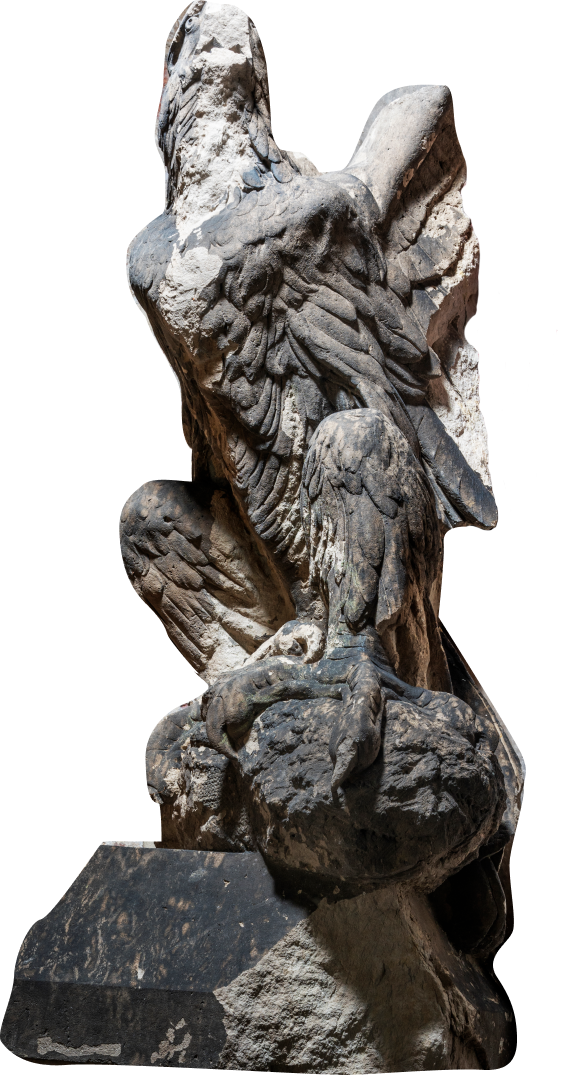
Fragment of the eagle from the memorial to the fallen of the 5th Guards Regiment on foot
Sandstone
1923
Archiv des Stadtgeschichtlichen Museums Spandau
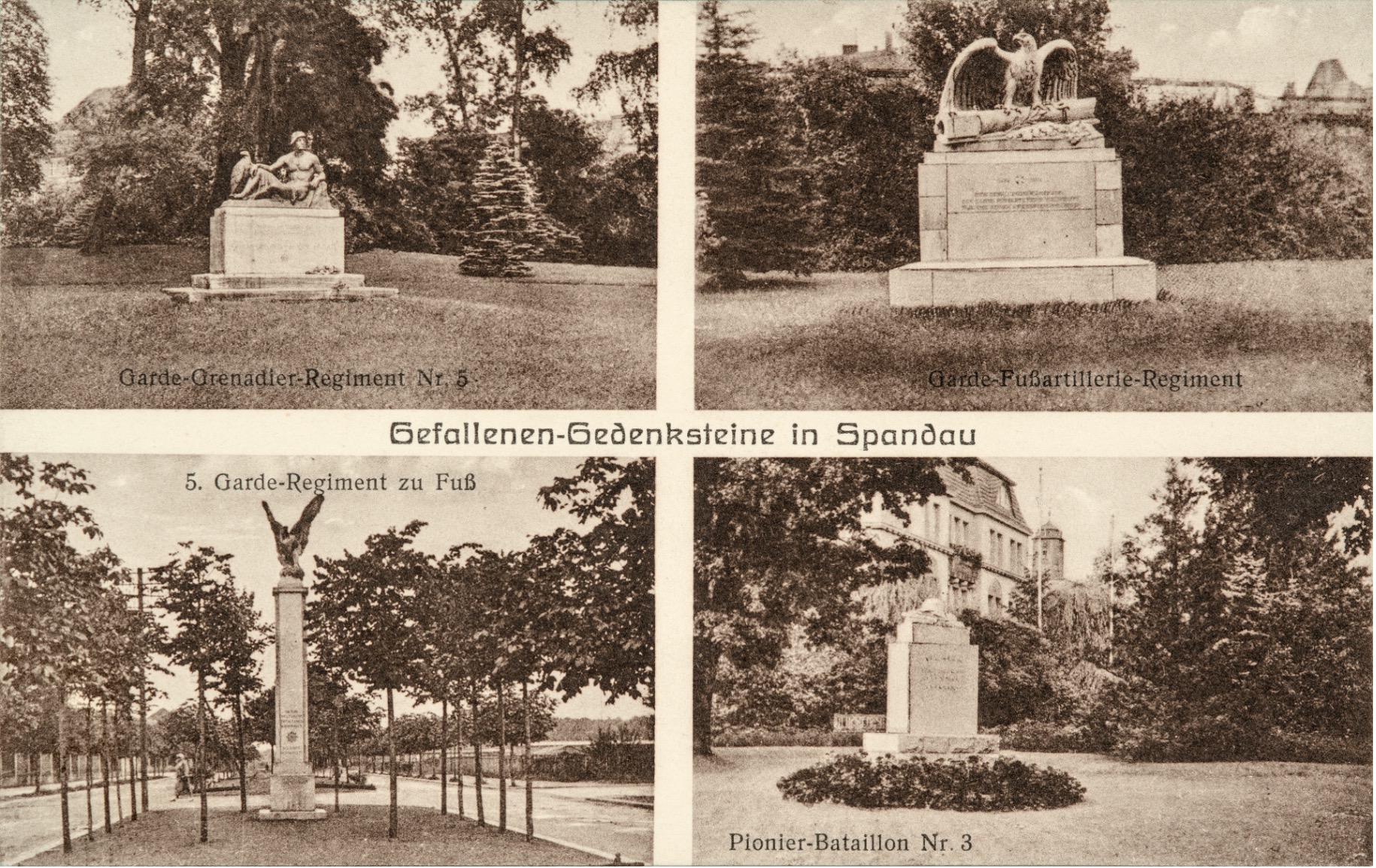
The monument, originally topped by an eagle, is one of numerous memorials to the fallen in Spandau and Berlin. It was erected to commemorate the fallen of the 5th Guards Regiment on Foot from the First World War. The pillar is adorned with an Iron Cross and the years 1914-1918. The memorial was dedicated on May 6, 1923 on the Askanierring in Berlin-Spandau – initiated by Spandau regimental associations. The Berlin architect Heinrich Wolff (1880-1944) designed the memorial column. The eagle, which eventually completed the monument, was not originally intended for the monument. It had been created years earlier by the sculptor Christian Behrens (1852-1905). The authorities had chosen this somewhat remote location due to possible “political irritability”, and they only agreed to the eagle being placed on a higher pedestal. The monument was moved to Hohenzollernring in 1961 for traffic reasons. Today it only consists of parts of the base, as in 1991 unknown persons toppled the eagle from its pedestal – presumably as a protest against the Second Gulf War.
Since then, the fragments of the eagle have been stored at the Parks Department in Tiefwerder and were brought back in 2015 in preparation for the exhibition “Unveiled. Berlin and its monuments” at the Citadel in 2015.
Christian Behrens (* 1852 in Gotha; † 1905 in Breslau)
Sculptor apprenticeship with the Gotha court sculptor Eduard Wolfgang
1870 Started studying at the Dresden Academy of Art
1873 receives the Great Golden Medal for his statue Hagen, den Nibelungenhort in den Rhein versenkend
1880–1885 Collaboration in studios and independent work in Vienna and Dresden
Production of numerous reliefs, architectural sculptures and monuments
Since 1886 Head of the Master Sculpture Studio at the Silesian Museum of Fine Arts in Wroclaw
1902 Appointed as honorary member of the Dresden Academy of Art
1905 Monumental sculpture of St. Michael the Archangel at the Monument to the Battle of the Nations in Leipzig